


Elections are no longer won on the ground alone. By 2026, a political campaign’s digital presence shapes voter perception just as much as rallies, door-to-door outreach, or print media ever did. With internet penetration deep into Tier 2 and Tier 3 towns, and nearly every voter carrying a smartphone, digital strategy has become the backbone of modern campaign management.
For political parties, candidates, and campaign managers, the question isn’t whether to invest in digital — it’s how to do it strategically, ethically, and effectively. This is exactly where specialized agencies come in. Osumare’s political campaign marketing services are built around this idea: campaigns need more than ad spend, they need a 360-degree digital approach that combines strategy, storytelling, and real-time monitoring. Here’s a detailed look at the digital strategies shaping political campaigns in 2026.
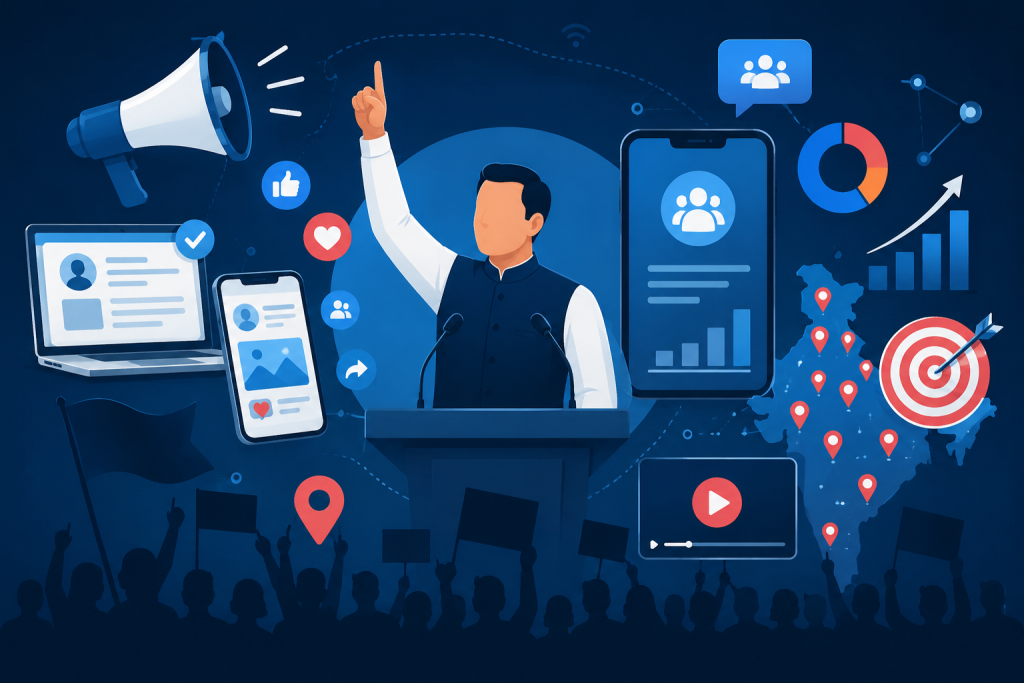
1. Hyperlocal and Regional Language Content
India’s voters are diverse, and so is the language they consume content in. A campaign speaking only in English or Hindi misses a massive share of the electorate.
- Vernacular content creation: Posts, videos, and ads tailored in regional languages (Marathi, Tamil, Telugu, Bengali, Kannada, and more) build a stronger emotional connection than translated content ever can.
- Hyperlocal messaging: Constituency-level issues — water supply, local infrastructure, employment — resonate far more than broad national narratives when targeted correctly.
- Geo-targeted ad campaigns: Platforms like Meta and Google Ads allow campaigns to target voters down to the pin-code level, ensuring the right message reaches the right constituency.
2. WhatsApp and SMS Marketing for Direct Voter Outreach
WhatsApp remains one of the most powerful — and most underestimated — tools in a campaign’s digital arsenal, especially in India.
- Broadcast lists and verified business accounts allow campaigns to share manifesto updates, event invites, and rebuttals directly with voters.
- Two-way engagement: Chatbots on WhatsApp can answer voter queries about polling booths, candidate background, or local initiatives instantly.
- SMS for low-bandwidth reach: In regions with limited data connectivity, SMS still cuts through, especially for reminders on voting day or last-mile updates.
Used responsibly, these channels create a sense of direct access between the candidate and the voter — something traditional media can’t replicate.
3. Short-Form Video: The New Campaign Rally
Instagram Reels, YouTube Shorts, and similar formats have become the digital equivalent of a street rally — except they reach millions instead of hundreds.
- Authentic, behind-the-scenes content (a candidate interacting with locals, addressing real concerns) tends to outperform scripted, studio-produced videos.
- Trend-based storytelling: Using popular audio and formats to explain policy points makes dense information digestible for younger voters.
- Consistency over virality: A steady stream of short videos builds familiarity and trust over time, rather than relying on one viral moment.
4. Social Media Listening and Sentiment Analysis
In 2026, campaigns can no longer afford to post and hope. Social listening tools track conversations across platforms in real time — a practice agencies like Osumare build into their online reputation management process for political clients, helping teams understand:
- How a particular announcement or statement is being received
- Which issues are gaining traction organically among voters
- Where misinformation or negative sentiment is spreading, so it can be addressed quickly
This data feeds back into messaging strategy, allowing campaigns to adjust tone, focus areas, and even event locations based on what voters are actually talking about.
5. AI-Powered Personalization
Artificial intelligence has moved from a buzzword to a practical campaign tool:
- Voter segmentation: AI models analyze demographic and behavioral data to group voters by likely concerns — economic issues, infrastructure, employment, and so on — enabling tailored messaging for each group.
- Predictive outreach: Identifying undecided or low-engagement voter segments early allows campaigns to allocate resources more efficiently.
- AI chatbots and virtual assistants: Available 24/7 on websites and messaging apps to answer voter FAQs, freeing up human volunteers for higher-value outreach.
It’s worth noting that AI use in campaigns must stay within election commission guidelines, particularly around deepfakes and synthetic media — a growing area of scrutiny in 2026.
6. Influencer and Local Opinion Leader Partnerships
Voters increasingly trust people they follow online over traditional political messaging.
- Micro-influencers with strong local followings (a respected teacher, a popular local vlogger, a community leader) can carry campaign messages more credibly than a celebrity endorsement.
- Issue-based collaborations: Partnering with creators who already discuss civic issues, local development, or youth employment lends authenticity to campaign outreach.
7. Data-Driven Voter Management (CRM for Campaigns)
A modern campaign runs on data infrastructure similar to any large enterprise.
- Centralized voter databases help track outreach history, volunteer assignments, and constituency-level engagement.
- Booth-level analytics allow campaigns to identify where ground efforts need reinforcement based on digital engagement gaps.
- Integration with field teams: Digital insights should directly inform door-to-door canvassing priorities, not exist in a separate silo.
8. Paid Digital Advertising — Within Compliance
Google Ads and Meta Ads remain central to campaign visibility, but 2026 brings tighter regulatory scrutiny.
- Pre-certification requirements: Political ads on major platforms require approval from election authorities before going live in many jurisdictions.
- Transparency libraries: Platforms now mandate public ad-spend disclosures, so campaigns should plan creative and budget allocation with this visibility in mind.
- Retargeting carefully: Re-engaging website visitors or video viewers with follow-up messaging works well, but must stay within campaign finance and platform advertising rules.
9. Online Reputation Management (ORM) and Crisis Response
A single piece of misinformation or an edited clip can spread faster than any official clarification. This is one of the biggest risks campaigns face, and it’s why vigilant, real-time monitoring is treated as a core service rather than an afterthought. Campaigns need:
- Real-time monitoring to catch emerging narratives before they snowball
- Rapid-response content teams that can issue fact-checks or clarifications within hours, not days
- Proactive positive content that builds a reservoir of goodwill, making the campaign more resilient to attacks
10. Building a Strong Digital-First Website and SEO Presence
A candidate’s official website is often the first stop for undecided voters researching credentials and track record. A well-built campaign website, backed by strong SEO, does more work than any single ad ever could:
- Mobile-first design: Most voters will visit via smartphone, so load speed and usability matter.
- SEO for candidate and party names: Ranking well for searches related to the candidate’s name, constituency, and key issues ensures the official narrative — not rumors or opposition framing — appears first.
- Clear manifesto and track record pages: Easy-to-navigate, fact-based content builds credibility with voters doing their own research.
Final Thoughts
Digital strategy in political campaigns has evolved from a “nice to have” into core campaign infrastructure. The campaigns that succeed in 2026 will be the ones that combine hyperlocal relevance, authentic short-form content, responsible AI use, and rigorous compliance — all while keeping the human connection with voters at the center.
Technology can amplify a message, but it can’t replace genuine engagement. The most effective digital campaigns are the ones where data and creativity serve the candidate’s real connection with their constituency, not the other way around.